Productivity
The reason your plans keep falling apart
has nothing to do with discipline.
I used to think I was the problem. Turns out, I was just using the wrong kind of system.
A
Alex Rivers
Freelance Creative Director · Portland, OR · 6 min read
April 2026
bestself.co
It always starts the same way for me. Sunday evening, fresh notebook, a sense of possibility. I sit down and write out everything I want to accomplish this week. The projects I've been putting off, the client work that needs to move, the things I keep saying I'll get to. By Tuesday, I've already lost the thread.
I used to call this a willpower problem. I'd tell myself I needed more discipline, more commitment, more of the thing that other people seemed to have and I didn't. I tried the apps, the methods, the morning routines. Some of them worked for a few weeks. None of them stuck. And after each failure, I added the same explanation to the pile: I'm just not the kind of person who follows through.
✍️
42%
People who write their goals down are 42% more likely to achieve them — not because they're more disciplined, but because of what writing does to how the brain commits.
Gail Matthews, Dominican University of California ·
read study
The problem was never discipline. The problem was that I was treating my plans like a list of things I wanted to do, instead of a structure that would actually help me do them. A list of goals is a wish. A system is something else entirely. It does cognitive work on your behalf — connecting the big thing to the small thing, and holding the goal when motivation runs out. When I finally found something that actually worked with how my brain operates, it wasn't dramatic. It was just clear.
What goal research actually shows
-
01
Goals without implementation intentions fail at far higher rates. The brain needs to know not just what to achieve, but when and how each action will happen.
Gollwitzer & Sheeran (2006) · Advances in Experimental Social Psychology
-
02
The most critical period for a goal is weeks 2 through 6. Motivation is highest at the start and after a breakthrough. The middle is where systems need to carry you when motivation can't.
-
03
Physical writing activates motor, visual, and cognitive encoding simultaneously. Goals written by hand are processed more deeply than typed equivalents.
Wood & Rünger (2016) · Annual Review of Psychology
Why plans fall apart in the middle
Here's what I used to do. I'd set a big goal for a quarter, feel energized about it for about a week, and then the urgency would slowly bleed away. Not because I stopped caring. Because there was nothing connecting the goal to what I actually did at 9am on a Wednesday. The goal lived on a vision board. My Wednesday lived somewhere else entirely.
This is the gap that most planning systems don't close. They're good at capturing ambition and terrible at connecting it to daily behavior. They tell you what to want but not what to do when you sit down at your desk on the fourteenth morning in a row with a hundred competing priorities and no clear sense of where to start. That's where most plans die — not because you lost interest, but because the system had no scaffolding for the middle.
"The people who follow through aren't more motivated than you. They've just stopped relying on motivation to do it."
Behavioral psychology research on habit formation and self-regulation
3 in 10
people actually write their goals down
21+ days
of consistent repetition needed to build a lasting habit
Left: Matthews (2015), Dominican University · Right: Wood & Rünger (2016), Annual Review of Psychology
Replace with: lifestyle photo — person at a desk, open journal in front of them, phone face down. Intention made physical.
What a different kind of system looks like
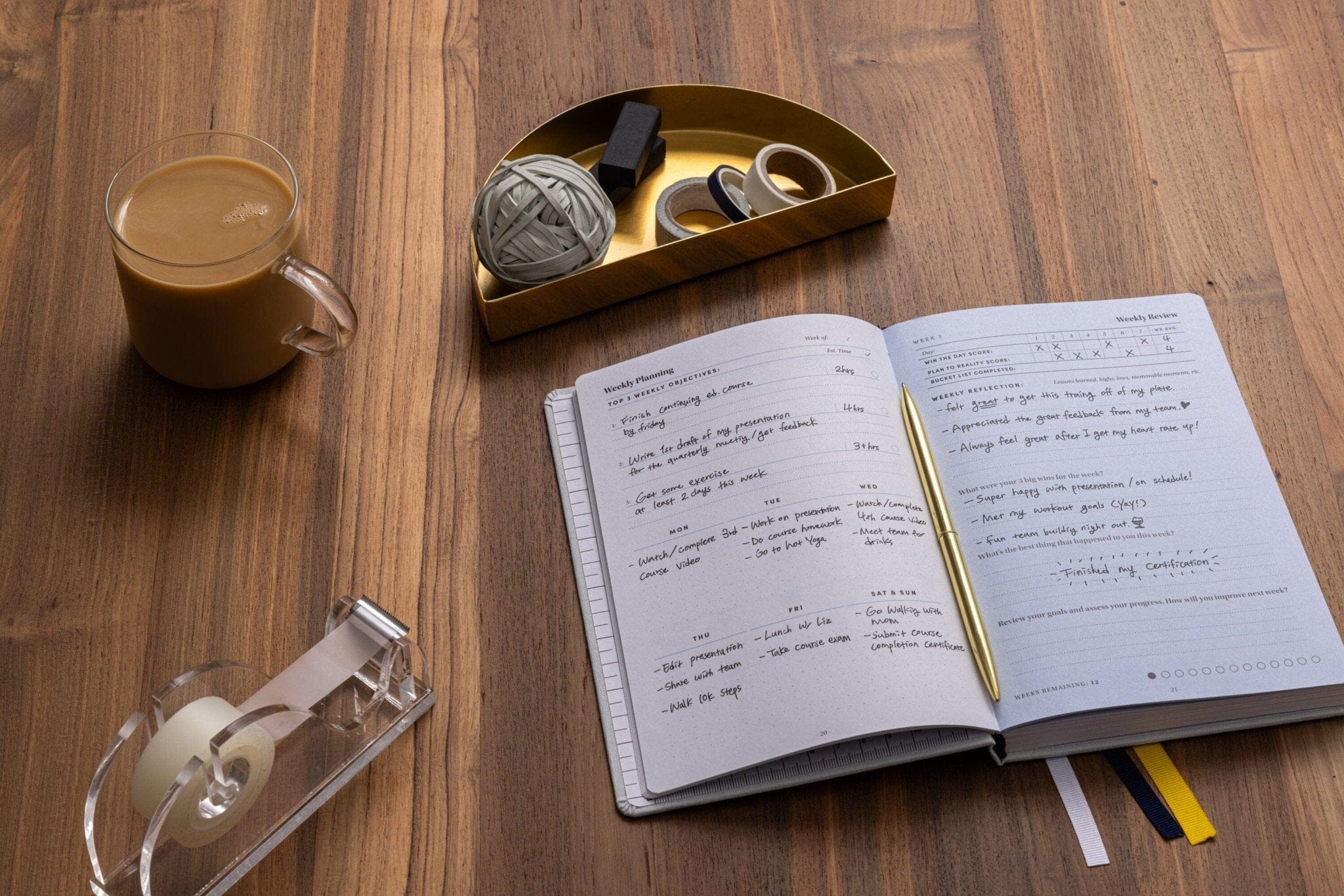
The systems that actually work have one thing in common: they're hierarchical. They connect the long-term goal to the week to the day, so that on a Tuesday morning, there's a clear answer to "what am I doing today and why." Not just a task list. A thread.
Most planners capture ambition at the top and tasks at the bottom, with nothing bridging them. The ones that actually change behavior give you a structure that holds the goal constant while you work through the weeks. And when you miss a day or a week, they don't show you evidence of your failure. They just let you start again.
Before
"Sunday I write everything down. By Wednesday I've forgotten where I put the notebook. By Friday I've decided I'll start fresh next week."
After
"I opened it at 8am, found my three priorities from yesterday, finished two of them, and marked them done. It's been twelve weeks. I've never made it twelve weeks before."
Click either side to bring it forward
I know what the hesitation sounds like, because I had all of it.
What usually stops people — and what's actually true
-
01
"I've tried planners. They don't work for me."
Most planners capture tasks. This one connects tasks to a goal. That's not a small difference — it's the whole thing.
-
02
"I'll miss days and then feel bad."
It's undated. There are no blank pages as evidence against you. You pick it up on a Thursday and start Thursday. No catching up required.
-
03
"I don't have big goals right now."
You don't need a dramatic life overhaul. You need one thing you want to move forward over the next 13 weeks. That's enough to start.
-
04
"My schedule is too unpredictable."
The daily layout works in 10 minutes. Three priorities, time blocks for the day, a quick close. Flexible enough for a freelancer's week.
-
05
"I feel like I could just do this on my own."
You absolutely can — and goal-setting and time management are deeply personal. The Self Journal offers a tested system that combines accountability, positive psychology, and structured planning, so you're not building the scaffolding from scratch every time you try.
📚
1.2M+
people — including many who called themselves "chronically bad at following through" — have used the Self Journal to close the gap between intention and action.
BestSelf Co. customer data · 1,790+ verified reviews
One system worth knowing
Goal Setting
Weekly Plan
Daily Page
Reflection
Built by someone who needed it to exist.
Cathryn Lavery created the Self Journal after failing to find a planner that actually worked with her brain. What started as a Kickstarter project became a tool used by over 1.2 million people across 50+ countries — because the underlying system was designed around how humans actually form goals and habits, not how they're supposed to.
- Structured 13-week goal system to track real progress
- Daily planning and time-blocking to stay focused
- Built-in accountability to keep you on track
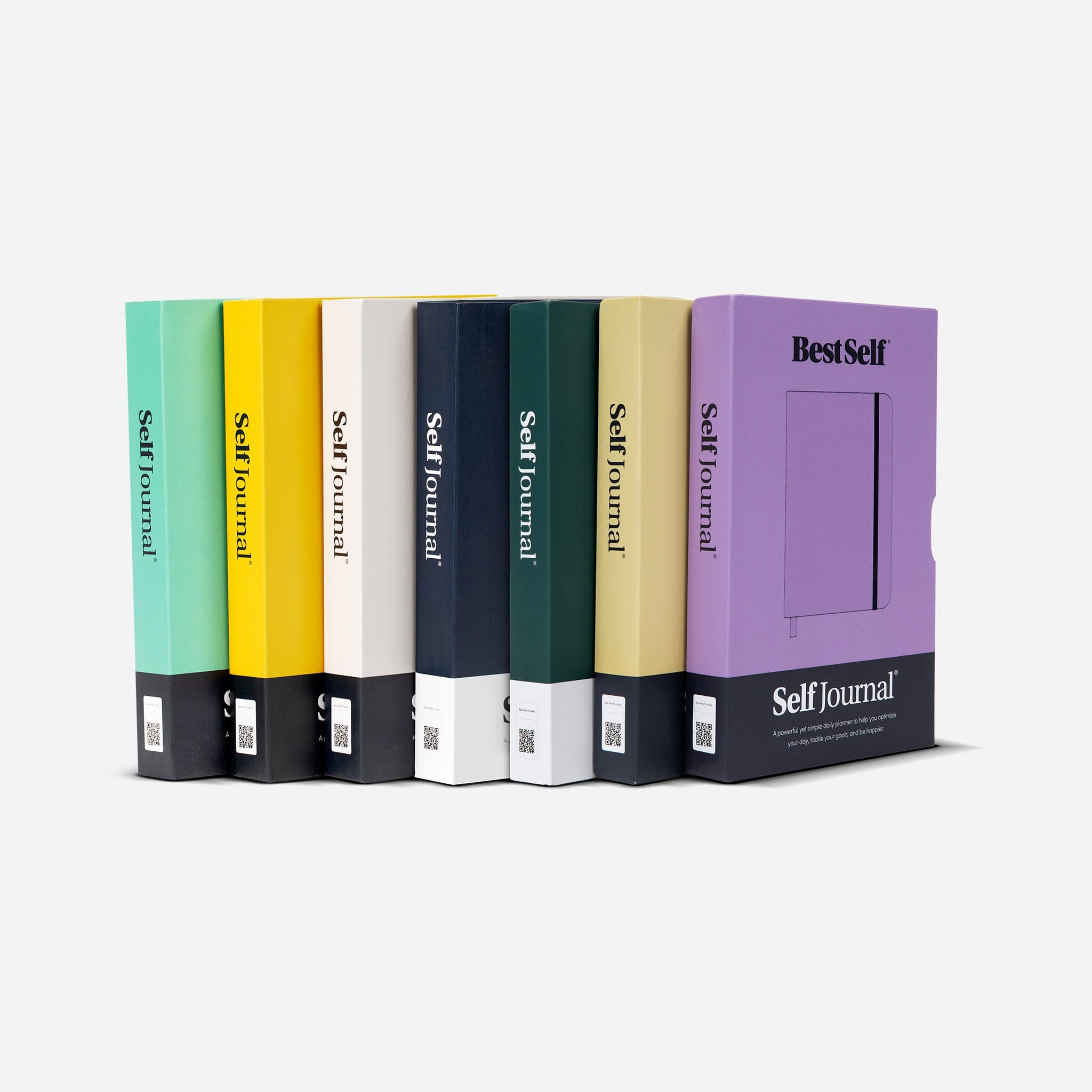
- Undated, hardcover, eco-friendly paper — start any day
I'm not the only person who had to stop blaming themselves before things changed. The reviews tell the same story in different words.
★★★★★
"This is the first thing that has actually stuck."
"I've done bullet journaling, digital planners, apps, spreadsheets... you name it. The structure is already there. I'm not designing a system, I'm using one. Big difference."
Sarah K. · Portland, OR
✓ Verified
★★★★★
"Second verse, better than the first."
"I admit I got myself a little sticker system (hearts, stars, cookies) to help me feel like I'm making bigger progress. It takes time to plan the big stuff but it's truly worth it. If you give up, start over and try again. There is space to be gentle with oneself."
Amanda Raby · Verified Buyer
✓ Verified
★★★★★
"For the first time I feel like I'm steering my days."
"I'm a freelancer and my biggest struggle has always been the gap between what I want to accomplish and what actually happens. The weekly planning pages changed everything. I can see exactly why things move forward or don't."
Marcus T. · Seattle, WA
✓ Verified
I stopped looking for a motivation fix a couple of years ago. What I needed wasn't a push. I needed a structure that would hold the goal when the initial energy ran out, that would connect the big thing to the small thing, that would make Tuesday at 9am answerable. The Self Journal did that. Still does.
If you've been blaming yourself for not following through, I'd gently suggest looking at the system before you look at the person using it. That's what changed things for me, anyway.
The Self Journal · $36
Stop planning to start.
Build the architecture to follow through.
13 weeks. Undated. Goal architecture, daily time-blocking, weekly reflection. Used by 1.2 million people who stopped waiting for the right moment.
Start the Self Journal →
Free shipping over $40 · 30-day returns · 6 colors available