
The average productivity app loses 95% of its users within three months. You’ve probably contributed to that number. Not because you’re uncommitted or disorganized — because most productivity apps are designed around a fantasy of how work happens, not the reality.
The fantasy: you open the app, set up your tasks, work through them in order. The reality: you open the app, get distracted by something else on your phone, add a few things, forget to close the loop, and eventually stop opening it. This isn’t a failure of character. It’s a design problem. Here are the five specific ways it plays out.
They live inside the same device that’s distracting you
This is the most fundamental problem, and it’s structural. To use your task manager, calendar, or to-do app, you have to pick up the device where Instagram, your group chats, the news, and every other competing reward live. Switching from distraction to productivity inside the same environment asks more of your self-regulation than most systems are designed to support.
A physical planning system removes this friction entirely. When you pick up a journal, you’re not picking up an object that can alert you, redirect you, or reward you for a detour.
They capture your goals and your tasks, but nothing connects them
Most productivity apps are excellent at two unrelated things: capturing big-picture goals and capturing daily to-dos. The problem is that they treat these as separate lists with no structural connection. You write down “grow the business this year” in one place and “reply to Marco about the invoice” in another, and nothing bridges them.
“A list of goals is a wish. A system connects the goal to what you actually do at 9am on a Wednesday.”
BestSelf Co.The most effective planning systems use a vertical structure: long-term outcome at the top, weekly objectives in the middle, daily priorities at the bottom. Every level feeds the next. That thread is what most digital tools are missing entirely.
They can be dismissed, minimized, and forgotten in one tap
Every app-based productivity system comes with a built-in escape hatch. The notification can be swiped away. The app can be closed. The reminder can be dismissed. There’s no version of using a digital tool where you can’t, in a moment of low motivation, simply make it stop asking you.
A physical journal sitting open on your desk can’t be swiped away. It can only be closed by a deliberate act — a meaningfully higher bar than tapping a button. That small friction often makes the difference between showing up and not.
A system built to fix the problems apps can’t solve.
Cathryn Lavery designed the Self Journal after every existing system failed her. Works offline, can’t be dismissed, connects goals to daily actions, starts over without shame. 13 weeks. Undated. 1.2M+ sold.
★★★★★ 1,790+ reviews · Free shipping over $40 · Start any day
They show you every day you’ve fallen behind, and punish you for it
Streak mechanics and dated calendars are designed to motivate through continuity. In practice, they often do the opposite. The moment you miss a day, you’re greeted by evidence of failure every time you open the app. For most people, that’s enough to stop opening it entirely. The tool that was supposed to help you follow through becomes a record of all the times you didn’t.
“The restart is part of the process, not a failure of it. A system that punishes the restart isn’t designed for real humans.”
BestSelf Co.The most forgiving systems are undated. You pick it up on a Thursday and start Thursday. Miss two weeks — come back Monday and start Monday, with no record of the gap. No catching up. No shame audit. Just a clean page.
They track whether you completed tasks. Not whether you moved forward.
You can have a perfect day by most app standards and still end it feeling like nothing that mattered actually moved. Apps are excellent at tracking completion. They are almost universally bad at tracking progress toward a meaningful goal. There’s a real difference between a full day of tasks done and a day where your 13-week goal moved forward.
The most effective daily planning tools close with a reflection prompt: did your actions today move the goal forward? Not “did you complete your task list?” That question fundamentally reorients what productivity means — and it’s one most apps don’t even try to ask.
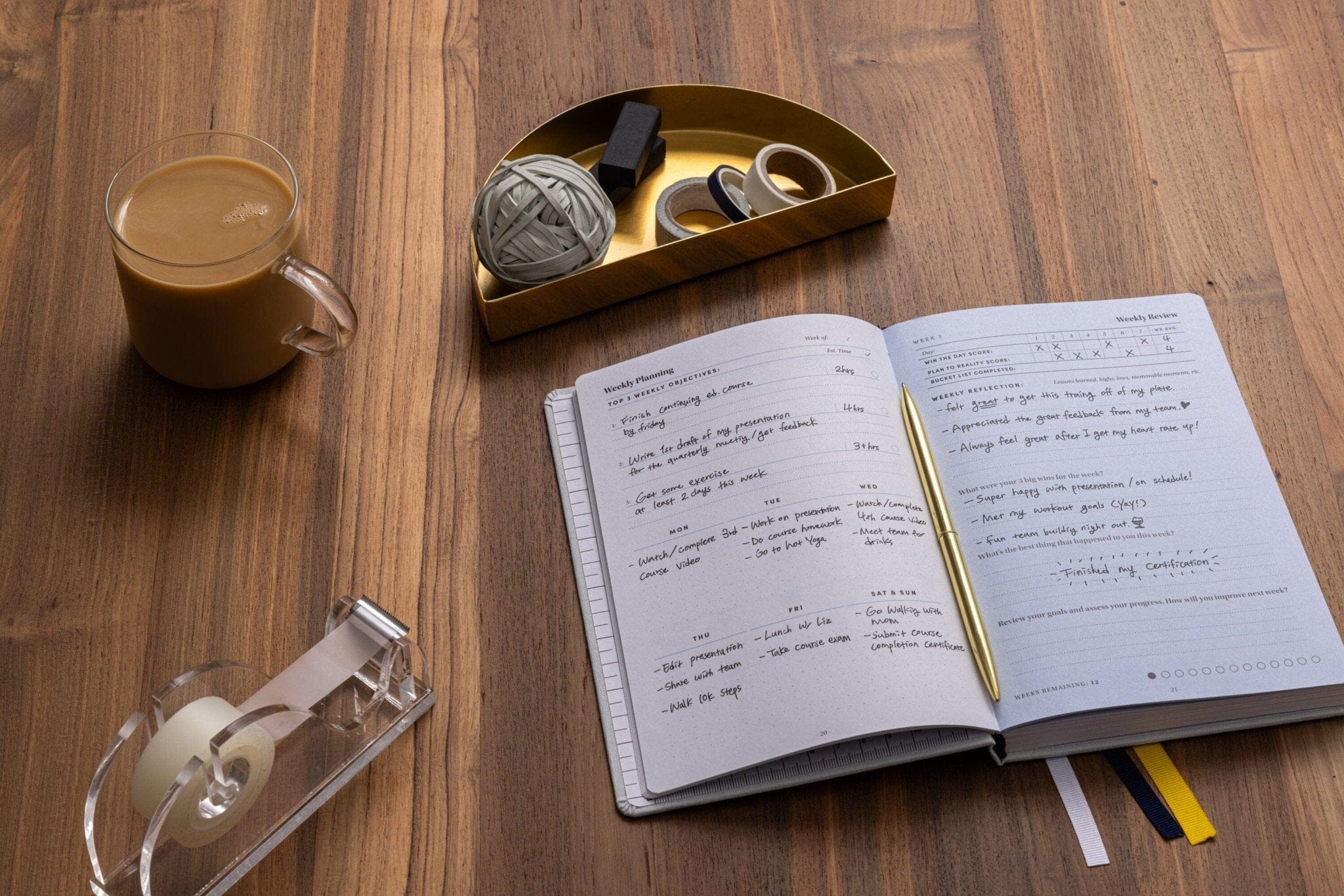
The planner built for how work actually happens.
13 weeks. Undated. Start any day. Goal architecture that connects to your week that connects to your day. No apps required.
Free shipping on orders over $40 · 30-day returns · 6 colors · No subscription


